Albany's Measure S would overhaul property transfer taxes
Five tax brackets would replace the city's flat 1.5% rate, generating an estimated $1 million more annually.
Albany voters will decide in November whether to lower transfer taxes on less expensive properties while raising them on higher-value sales.
Measure S would replace the city's flat 1.5% real property transfer tax with a graduated tax that would lower the rate for some property sales and increase it to as much as 3% for higher-value transactions.
The city currently charges a flat tax of 1.5%, or $15 per $1,000, on property transfers. The revenue goes into Albany's general fund, which pays for city operations, including street and park maintenance, recreation offerings, public safety, and environmental programs.
Measure S is estimated to generate an additional $1 million annually for general city services.
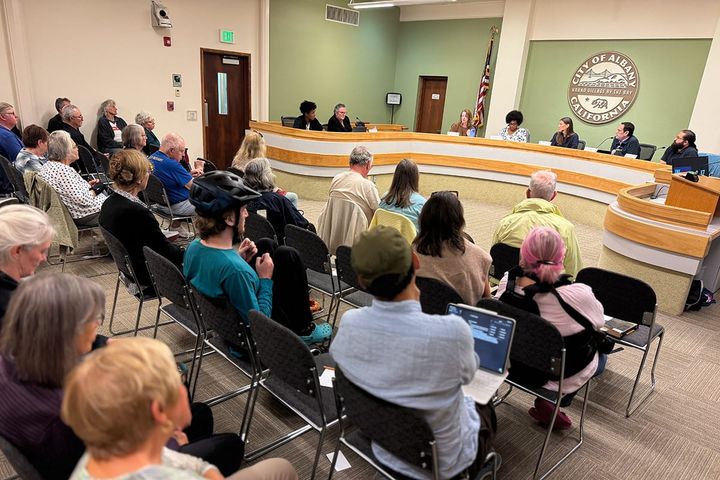
"Many communities across California are switching to a tiered system, that just acknowledges that there are different price points," Councilman John Miki said at a September endorsement meeting on Albany measures, hosted by the Albany Democratic Club.
San Francisco, Berkeley, Oakland and Emeryville use graduated real property transfer taxes, with rates that vary based on a property's sale price.
Piedmont, like Albany, has a flat rate, currently 1.3%. Piedmont voters will decide in November whether to increase that rate to 1.75% under Measure GG, which is expected to generate approximately $1.5 million a year.
Measure S would bring new tired tax
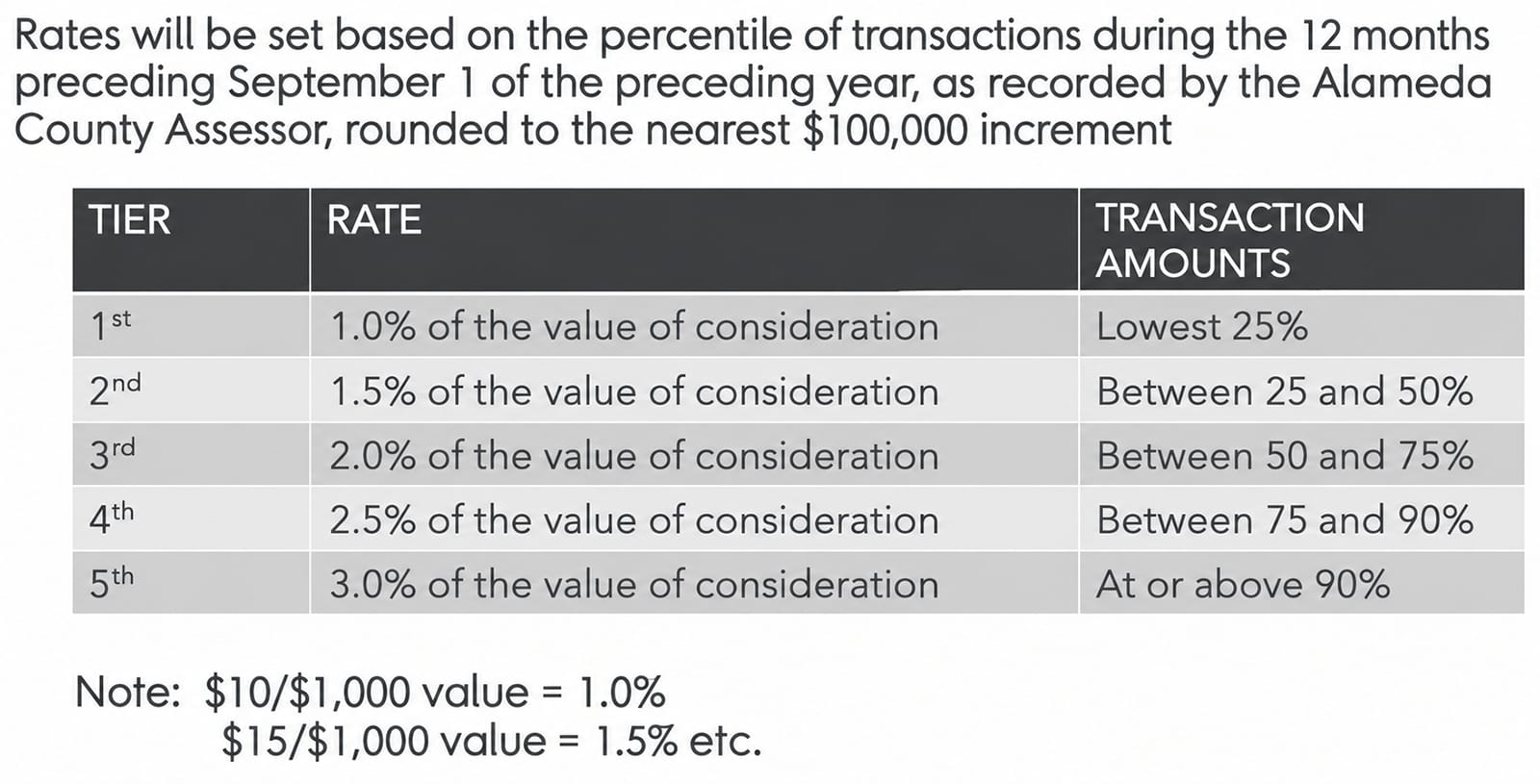
Under Measure S, some property sales could be taxed at a lower rate, while others would face higher rates.
The lowest tier would apply a 1% tax to properties whose sale values fall below the 25th percentile of transactions recorded by the Alameda County assessor during the 12 months preceding Sept. 1 of the previous year, with thresholds rounded to the nearest $100,000, according to the city attorney's impartial analysis.
In a city example using 2024-25 data, the lowest tier applied to properties selling for less than $950,000.
"We know that a lot of condos in Albany sell for less than a million dollars," Miki said at the September forum. "For condos, or for the smaller, older single-family homes, this is really a lower rate … to keep things a little more affordable."
Properties in the 25th to 50th percentile would be taxed at the current rate of 1.5%, or $15 per $1,000.
For properties valued at or above the 50th percentile but below the 75th percentile, the tax rate would be 2%.
The fourth tier would apply a 2.5% tax to properties valued at or above the 75th percentile but below the 90th percentile.
Sales at or above the 90th percentile, Miki said, would be taxed at 3%. In the city's example using 2024-25 sales data, that threshold was $2.3 million.
"We've only had a few houses that have ever sold for over $2.3 million," he noted at the forum.
Each tax rate would apply to the full value of the property transaction, not just the portion above the threshold for that tier.
For example, a property selling for $800,000 in the lowest tier would incur an $8,000 transfer tax under Measure S, compared with $12,000 under the current rate. A $1.5 million sale taxed at 2% would incur a $30,000 tax, an increase of $7,500. And a $2.5 million sale in the highest tier would generate a $75,000 tax, double the current $37,500.
Under Albany's municipal code, buyers and sellers are jointly responsible for the transfer tax, although they can negotiate who pays it as part of a property sale.
The transfer tax applies to more than home sales. It also covers commercial properties and certain changes in ownership of companies that hold real estate, subject to exemptions.
Measure S requires a simple majority to pass. If approved, the new tax rates would take effect Jan. 1, 2027.
Albany's median home sale price was approximately $1.19 million in the three months ending in September, up 16.2% from the same period last year, according to Redfin. Homes sold in an average of 16 days, compared with 15 days in 2025.
Albany had 28 home sales in September, unchanged from September 2025, according to the Redfin data.
Miki noted that real property transfer taxes "tend to fluctuate the most across California."
"For Albany, we have, at least in the last few years, done better than estimated, but it is one that tends to change as the market changes," he said.
The City Council unanimously approved placing Measure S on the November ballot at its July 20 meeting.
As a general tax, Measure S would not earmark the additional revenue for specific programs.
Supporters say the money would help maintain city services, while opponents argue that the measure offers no guarantee that the revenue would be spent on essential services.
In the official ballot argument in favor of Measure S, City Council members argued that Albany's property values and quality of life are partly supported by city-funded services, including its own fire, medical and police departments.
"Measure S ensures we continue funding these services by adjusting the transfer tax when properties sell," council members wrote. "This approach recognizes that a significant portion of a property's value comes from the services the City provides."
Officials said the measure would make property transfer taxes more equitable by lowering the rate for properties in the lowest quarter while increasing taxes for properties that sell for more than the median, and applying the largest increase to properties in the top 10%.
In the official ballot argument against Measure S, Albany resident and local Realtor Francesco Papalia argued that the tax would give the city too much discretion over how the revenue is spent.
"Measure S does not protect essential services. It gives City Hall a blank check while increasing pressure on housing and local businesses," Papalia wrote.
He cited the city attorney's impartial analysis, which states that revenue from Measure S would go into the general fund and "may be spent for any City expense."
Opponents also argue that higher transfer taxes would make buying and selling property more expensive in Albany, potentially worsening the city's housing affordability problems. They contend that the measure would not provide direct assistance to first-time homebuyers or older homeowners.
Read complete election coverage on Albany Scanner, including our reporting on all six local ballot measures.
Have questions for Albany Scanner, or want to share story tips? Here's how to reach us.