Measure RTM: What's at stake for Albany transit riders?
Albany riders could face reduced AC Transit bus service and limited BART access if the measure fails.
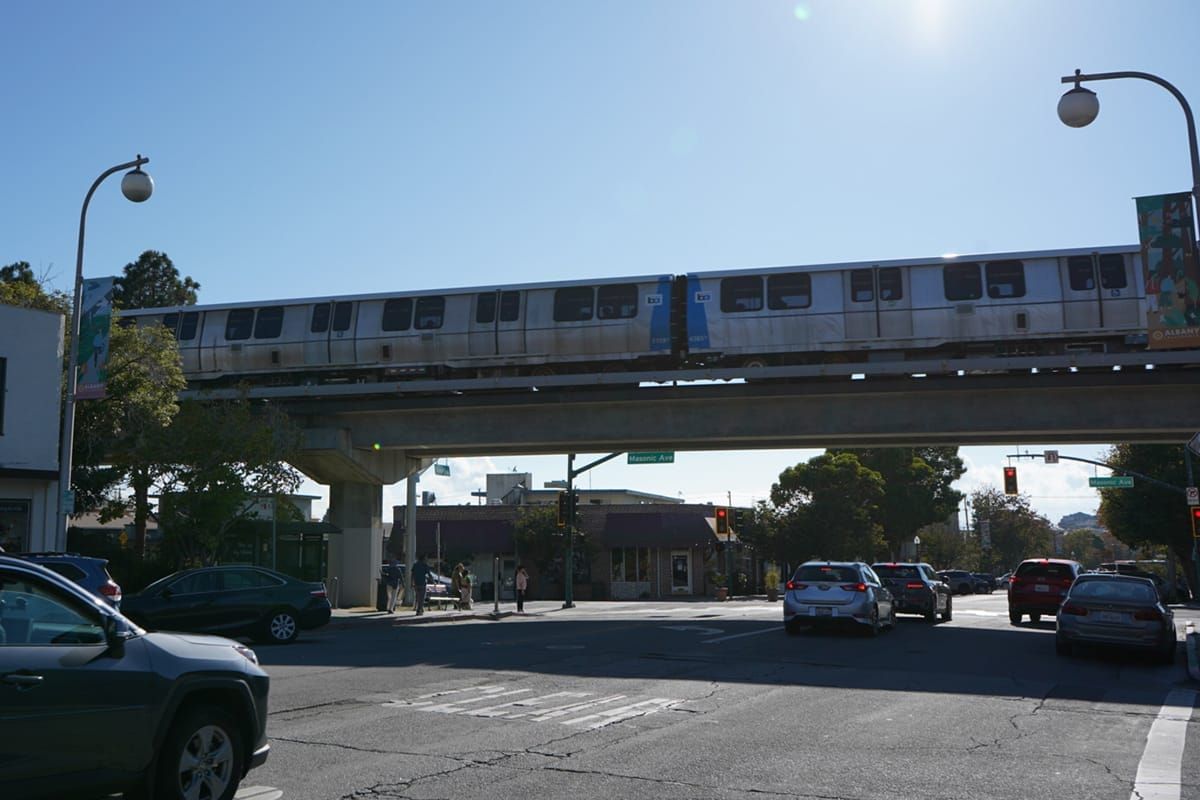
Voters in five Bay Area counties will decide Nov. 3 whether to throw a lifeline to local transit agencies by raising sales taxes for the next 14 years.
The Regional Transit Measure, or Measure RTM, would establish a half-cent sales tax in Alameda, Contra Costa, San Mateo and Santa Clara counties, and a one-cent sales tax in San Francisco.
If approved, the sales tax increases would take effect April 1, 2027, and remain in place through March 2041.
The measure would generate nearly $1 billion annually — an estimated $980 million — primarily to fund operations at AC Transit, BART, Caltrain and Muni. The four major agencies face a combined $800 million in operating deficits starting next year.
Measure RTM needs a simple majority across the five counties to pass.
If Measure RTM fails, there would be direct consequences for Albany residents who rely on AC Transit bus service and BART stations in El Cerrito and Berkeley, according to the transit agencies.
"No one will be spared the dire impacts from the dramatic service cuts that will occur if we fail to pass the Regional Transit Measure," Bay Area Council President and former Oakland mayor Libby Schaaf said in a prepared statement.
Passage of Measure RTM remains uncertain, with an October poll reported by SFGate finding 48% support, 34% opposition and 18% undecided.
BART plans 9 p.m. shutdowns if Measure RTM fails
If Measure RTM fails and no other operating revenue is secured, BART plans to reduce train service hours by 63% beginning in January 2027, according to the agency's Alternative Service Plan.
The plan calls for daily service to end at 9 p.m., trains to run every 30 minutes and the system to shift from five regular lines to three, with limited service on two others.
BART also plans to increase fares and parking fees by 30% under the contingency plan.
In addition, BART has said it could close up to 15 stations or suspend service on as much as 25% of its track network beginning in July 2027, subject to further review, safety considerations and board approval.
AC Transit bus lines in Albany could see cuts
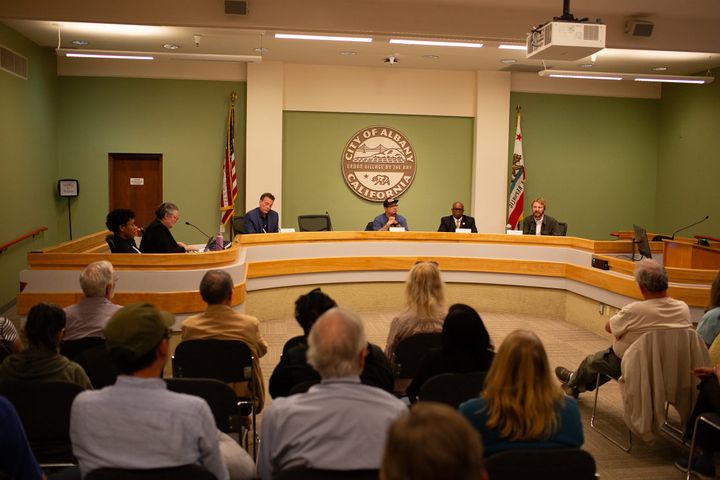
At a meeting last month, AC Transit's Claudia Burgos told the Albany City Council that the agency faces a projected deficit of $200 million over the next four years.
If Measure RTM fails and no other funding is secured, the agency's contingency plan calls for less frequent buses, shorter operating hours and the elimination of some routes throughout the East Bay.
AC Transit transportation planner Carissa Lee said the "backbone" of Albany's bus service would be protected, but that residents could see service cuts on lower-ridership lines.
"A top priority is preserving what we call the primary route network. These are our busiest bus lines," she said.
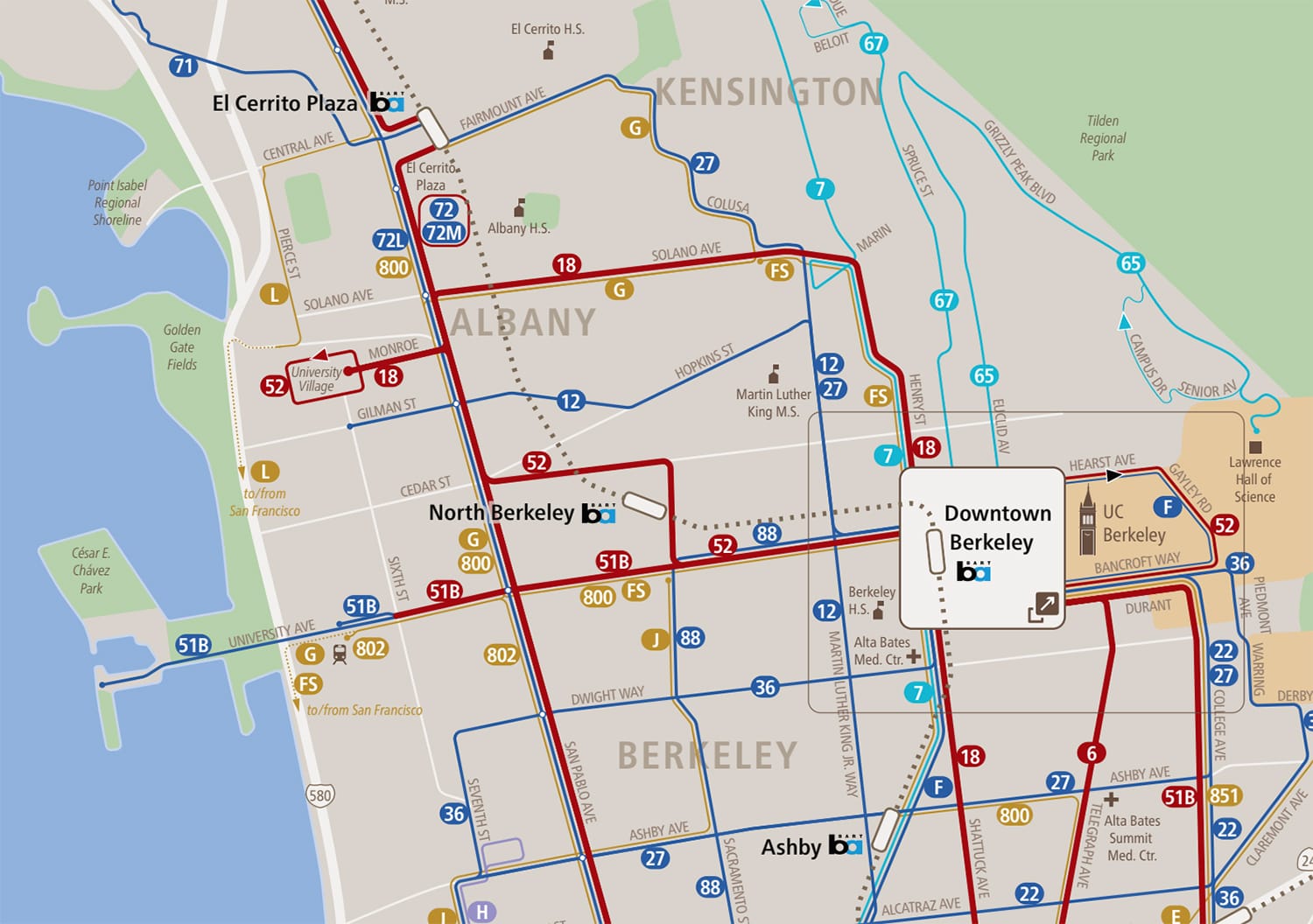
Weekday frequencies of every 15 minutes would be prioritized for Albany bus routes with high ridership, including "the 18, which runs along Solano Avenue, as well as the 72, 72M and 72L on San Pablo."
Proposed changes to AC Transit lines serving Albany include:
- Line 12: Buses would run every 30 minutes on weekdays, with reduced service hours (6 a.m. to 10 p.m.)
- Line 18: Buses would run every 30 minutes after 8 p.m.
- Line 52: Service hours would be reduced (6 a.m. to 10 p.m.)
- Line 72: Service would begin at 4 a.m. instead of 5 a.m.
- Line 72L: No change
- Line 72M: No change
- Line G (Transbay): Eliminate two westbound a.m. trips and two eastbound p.m. trips
- Line 800 (All Nighter): No change
The AC Transit board is scheduled to consider a final contingency plan on Dec. 9 if Measure RTM fails, with proposed service cuts to begin in June 2027.
Measure RTM sees some Albany support
Measure RTM has drawn support from Albany residents including Councilman Robin López, who recently co-hosted a campaign event to promote it.
He told Albany Scanner he frequently uses AC Transit with his 4-year-old son.
"If this measure fails, we risk having more vehicles on the road, more challenges with parking and gridlock rush-hour traffic, and impacts on our climate resulting from emissions of more vehicle miles traveled," López said.
He said potential reductions in AC Transit service, combined with reduced BART access at El Cerrito del Norte and North Berkeley stations, could increase traffic and worsen parking on Solano, Marin, Washington and San Pablo avenues.
Read more about elections on Albany Scanner.
Albany resident Amy Smolens, who works evenings in sports broadcasting, relies on public transit to get to work and attend events around the Bay Area.
"I'm seriously thinking: Would I have to retire?" she said. "Do I want to take an hour and a half or two hours to drive in, and then the same amount to drive home and deal with parking and all the stress and post-game traffic?"
Smolens is also concerned about proposed reductions in AC Transit's Line 18 service after 8 p.m., which she said could leave riders waiting nearly half an hour for a bus.
Longer waits could turn a roughly 30-minute commute into an hourlong trip, she said, making transit less practical at night.
"It's not perfect, but it's what we have, and it does mostly get us where we're going," she said. "I mean, not having it would be a disaster."
Opponents say sales tax increase is inequitable
Opponents of Measure RTM dispute transit agencies' assertion that the proposed service cuts are necessary.
They argue that agencies should redirect existing funds, reduce overtime and renegotiate labor contracts before asking voters to approve a new sales tax.
The Committee for Affordable Bay Area Transit is the official campaign coalition opposing Measure RTM. No on Measure RTM is sponsored by the Contra Costa Taxpayers Association.
In their official argument against the measure, they wrote that the sales tax would disproportionately burden lower-income residents because it applies "regardless of income," and argued that wealthy corporations should contribute more toward transit funding.
They also warn that combined sales tax rates would exceed 11% in some Bay Area cities.
"BART, Muni, AC Transit and Caltrain each get seats on the committee overseeing their financial efficiency," the argument against the measure reads. "It's the fox guarding the henhouse."
Under the measure and its authorizing legislation, the transit agencies would undergo independent financial efficiency reviews. A separate oversight committee would monitor distribution of the tax revenue.
Read complete election coverage on Albany Scanner, including our reporting on all six local ballot measures.
Have questions for Albany Scanner, or want to share story tips? Here's how to reach us.