Albany school board candidates weigh AI, school funding
Five candidates are vying for four school board seats.
Albany school board candidates found common ground on AI and school facilities but differed on budget solutions at an election forum last week.
The event, hosted by the Albany Democratic Club, gave voters a chance to hear from candidates running for Albany's City Council and Board of Education. Three four-year school board terms and one two-year term are up for election.
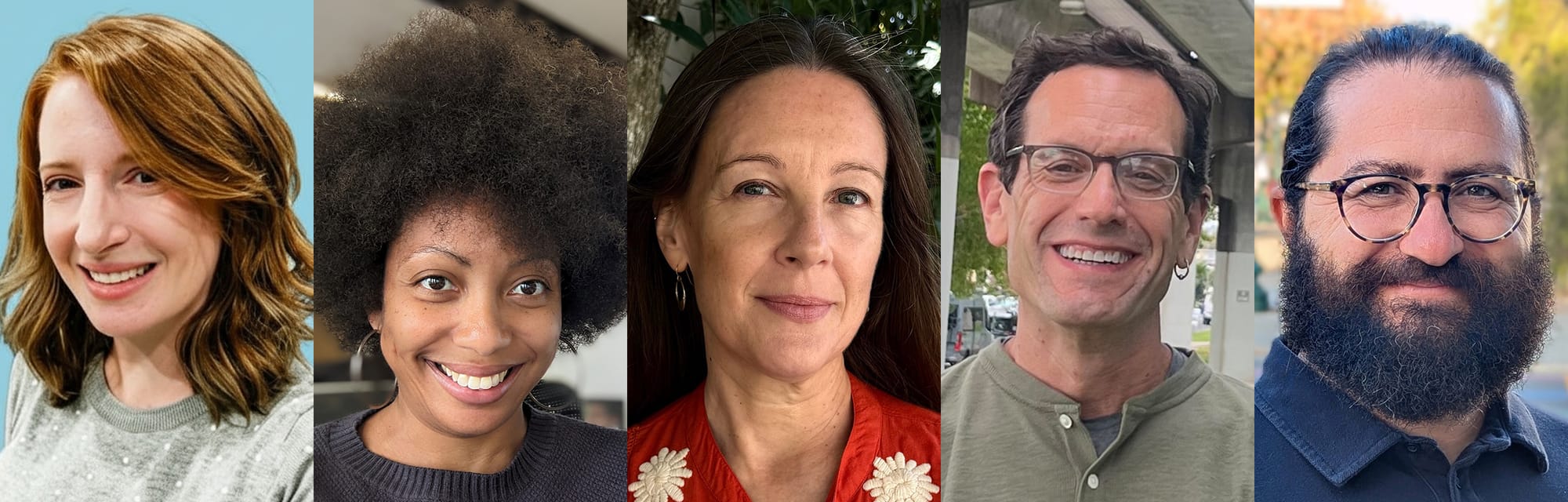
Five candidates are vying for seats on the school board. In ballot order, they are Margaret Allen, Melissa Boyd, Becky Hopwood, Josh Mahoney and David McKinney. Boyd, Hopwood and Mahoney are seeking re-election.
Allen, an Albany Unified School District parent and finance director, had a prior commitment, the club confirmed, and was not in attendance.
The candidates found considerable common ground on some of the district’s biggest challenges, including aging facilities, student use of artificial intelligence and support for students who may be underserved.
But they offered different ideas for confronting a looming financial threat: the potential loss of millions in tax revenue if Golden Gate Fields is sold to a tax-exempt entity.
Reflecting on Measure L
Albany school board candidates largely agreed on where to start spending 2024 Measure L funds — but they also acknowledged the $63.8 million bond won’t come close to covering the district’s long-term facilities needs.
Becky Hopwood, who helped lead the campaign for Measure L, said the district has an obligation "to honor the trust voters placed" in it when they approved the bond, but added that the funding can't cover everything.
"It’s a small amount of [the] millions of dollars we need," she said.
David McKinney, an education researcher, said moving transitional kindergarten programs to Albany Children’s Center could create more space at elementary schools and aid in future planning.
"You kind of have to make the space at ACC so they can accept [transitional kindergarten] students, and then you can work on somewhere like Cornell that's also in great need," he said.
Josh Mahoney, who serves on the district's facilities master plan steering committee, supported investing in Albany Children's Center first.
"The [ACC] facility does not reflect the love and care that those teachers give to those students," Mahoney said, adding that Cornell would be his next priority. The district will eventually need to consider improvements to the middle and high schools, too, he said.
When upgrading facilities beyond ACC and Cornell, Melissa Boyd said she'd like to engage communities and "listen to people who have feet on the ground."
"I always defer to people who are actually on those school sites every day," she said.
 Emilie Raguso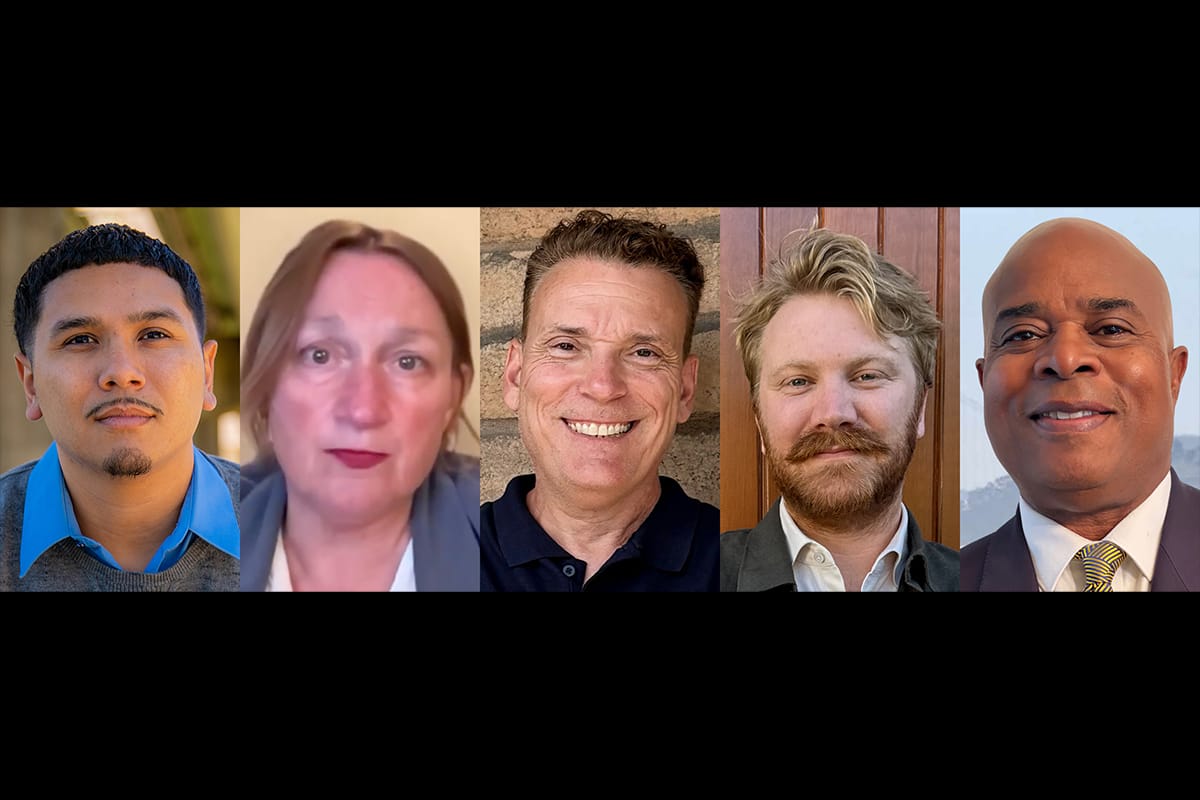
Artificial intelligence policies
Students' use of generative artificial intelligence platforms — like ChatGPT, Claude and other applications — has prompted districts across California to adopt policies and guidance as they navigate a changing learning landscape.
School board candidates said the answer to students’ growing use of artificial intelligence isn’t to ban it, but to teach them how to use it responsibly. All candidates called for a clear districtwide AI policy shaped by teachers, families and age-appropriate standards.
Incumbents Hopwood, Boyd and Mahoney touted the district's current technology policies and recent movement toward an all-encompassing AI policy.
Hopwood added that the district "just launched an education technology committee" that will be tasked with reviewing those policies.
"Our approach needs to be thoughtful and balanced, [because] AI can be an incredibly powerful tool," she said. "It needs to serve learning and not distract from it."
Mahoney said students should begin learning about AI from "an ethical standpoint," with age-appropriate standards and community input.
"How do you understand trust? How do you understand sources? By building that digital literacy at the youngest age, they'll be more prepared to deal with a changing landscape," he said.
McKinney said "students thrive when they feel a sense of belonging and are able to guide their own learning," adding that the district should work with teachers and listen to how they are using AI as it develops a policy.
Boyd agreed "feedback from the community" was essential "to understand the different ways in which AI can and should be used" in classrooms, with policies potentially differing by grade level.
"We should not have a knee-jerk reaction, and should be honoring our teachers’ needs," she said.
Students with disabilities, multilingual learners
Candidates were asked how the district can better serve students from marginalized communities, including students with learning disabilities and multilingual learners.
Boyd said Albany’s status as a high-performing district "comes with a responsibility" to examine which students are benefiting from that success. She pointed to the recent creation of a family engagement coordinator position to help with outreach.
"From that position, we will be able to reach out to families who haven’t been as vocal at [school] board meetings or are unable to advocate for themselves," she said.
Hopwood said the district must ensure that "students with disabilities receive supports in IEP [Individualized education program] and 504 plans."
California public schools are legally required to provide accommodations and services specified in students’ IEPs and 504 plans. Failure to inform teachers or provide accommodations can be a violation of students' rights and result in litigation.
"We need to listen to families as well, particularly those facing language, cultural, economic or accessibility barriers," Hopwood added.
McKinney said the district "could improve in the way it analyzes data," adding that there are areas where "the district performs disproportionately lower on average" than its neighbors.
"The district has made strides but still has a way to go," he said, adding that students with IEPs and 504 plans need more support.
Mahoney said district data offers an opportunity "to dig a level deeper" on equity.
"One of the key things you can do [as a board member] is ask questions and bring attention to things by asking those questions, and then have the district actually take action," he said.
 Emilie Raguso
Golden Gate Fields revenue loss
The future of Golden Gate Fields, and the millions in tax revenue tied to the property, represents a potential financial hit for the school district as well as the city.
In March, tax-exempt nonprofit Trust for Public Land said it would buy the former racetrack and turn it over to the East Bay Regional Park District for use as a park. If the $175 million deal goes through, the property would become tax-exempt, eliminating a significant source of revenue.
Candidates offered different ideas for making up the shortfall, from state advocacy and new taxes to protecting classroom services from cuts.
Mahoney said the loss of revenue would be significant and estimated it would be equivalent to roughly five teaching positions, or about 1% of the district’s budget.
Mahoney said he had been meeting with state lawmakers and that the district should advocate at the state level while making sure residents understand what the lost revenue could mean for Albany.
McKinney said core instructional positions and activities should remain while "less crucial" positions and programs could be considered for cuts.
"I know folks don't like new taxes, but that is often a way we can support our schools," he said.
Hopwood said the district needs to find ways to increase the amount of state funding it receives and pursue other sources of revenue.
She warned that the district could face significant teacher layoffs if state Proposition 3 does not pass.
The measure would make permanent an existing income-tax increase on high-income Californians, with most of the revenue going to K-12 schools. The tax is currently scheduled to expire in 2031, according to Ballotpedia.
Boyd said that, if cuts need to be made because of lost revenue, "the district must make sure that [mental health] materials and services provided aren’t the areas where cuts are coming from."
"It’s not as if there are places we can stand to lose funding," she said.

When you support Albany Scanner, you help make local news available to everyone. Double down through Sept. 30, when every first-time gift is matched dollar for dollar, up to $10,000. Double your impact →
Watch: Albany Democratic Club election forum
Have questions for Albany Scanner, or want to share story tips? Here's how to reach us.