Meet Tom Bekeny, Albany’s mandolin master
His attention to detail has put him at the center of a scene that has attracted some of the genre’s most significant bluegrass players.
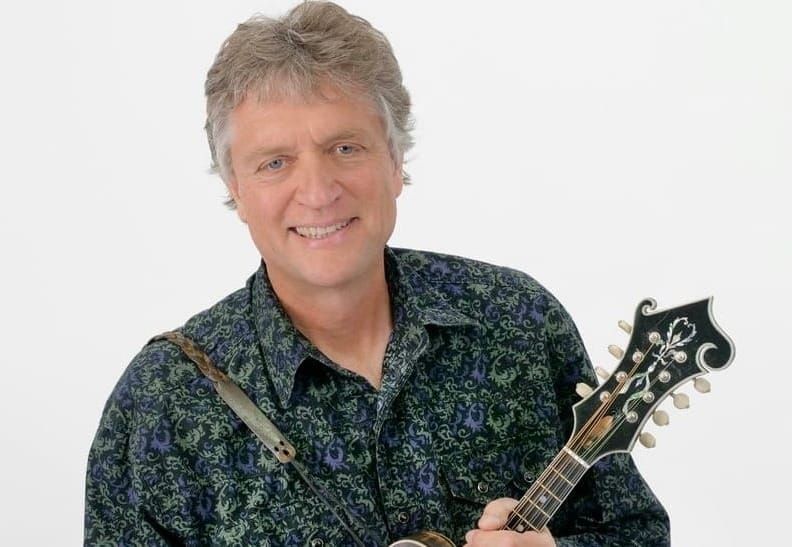
Tom Bekeny is always on the hunt.
One of the Bay Area’s finest bluegrass mandolinists and an accomplished fiddler, he keeps an eye out for friendly venues where he can perform with one of his combos.
His jazz group returns to Ocean View Brew Works for a hometown gig Sunday afternoon, extending the Solano Stroll’s revelry a few blocks up San Pablo Avenue. The group also performs Oct. 4 at Walnut Creek’s Club 1220 and Oct. 14 at Cato’s Ale House in Oakland.
While Bekeny is best known for his bluegrass prowess, often featured during his three-decade tenure in the Kathy Kallick Band, his next bluegrass performance doesn’t take place until Dec. 28 at Blondie’s Bar in San Francisco.
"I’m always looking for new places to play," said the longtime Albany resident. "I’ve been playing jazz at the Tipsy Yeti in Berkeley, and I found that by walking in off the street and meeting the manager. We were at the Kensington Circus Pub for years, but not so much lately. Most of these places are for the jazz stuff. Finding venues to play bluegrass seems to be a bigger challenge."
While Bekeny is one of the region’s premier bluegrass mandolinists, jazz mandolin is a much rarer pursuit. He’s gradually assembled Tom Bekeny and Friends, which is built on the supple rhythm section tandem of Richmond drummer Fred Johnson and bassist JJ Hartmann. Oakland guitarist Chris Grampp rounds out the quartet.
His bluegrass combo often features Berkeley bassist Mark Shatz, who can often be found touring with banjo star Béla Fleck, and John Gravois on guitar and fiddle.
A fellow Albanite, Gravois lives a few blocks from Bekeny, and they connected about two decades ago when he took a few mandolin lessons. They've stayed in touch and, when Gravois turned his attention to guitar, focusing on pre-World War II jazz idioms, they started playing together more often.
"He is musically very curious in a way that’s very cool from someone who comes from a bluegrass background," said Gravois, a singer-songwriter who spends his days as a senior editor at Wired while working on an album of original material produced by Shatz.
He previews some of the new material Sunday afternoon at Wyldflowr Arts in West Oakland with John Gravois and the Better Knowns on a double bill with the all-female bluegrass quartet Bitchcraft.
"Tom has all sorts of experiments with obscure mandolin techniques," Gravois continued. "He does this split-string technique that very few people do, and I’m sure he spent a long time by his lonesome mastering it. He has a kind of rigorously experimental approach to music that’s different than perfectionism, messing around in a way that’s not haphazard."
Bekeny's attention to detail and easygoing manner have put him at the center of a scene that has nurtured and attracted some of the genre’s most significant players.
Laurie Lewis recruited him for the first incarnation of the Grant Street String Band, and he went on to perform with luminaries like the Rowan Brothers, David Grisman and Jerry Garcia.
Bekeny played fiddle in California’s standard-bearing traditional bluegrass band High Country and mandolin in the all-star bluegrass "jam" band Bangers and Grass with guitarist Jim Nunally, bassist Steve Pottier, banjo player Bill Evans and fiddler Chad Manning (though both groups are mostly on hiatus). He figures his background as a psychologist probably helps in navigating different personalities that have to mesh in order for a healthy band to function.
"That can be really challenging whether being in a band or working in psychological settings," he said. "You have to have some soft skills that are really important for your peers in a band. A lot of them are basic things that translate to a clinical setting."
Since retiring from his private practice in 2024, he’s focused on finding more opportunities to play, "though part of me really misses the work," Bekeny said. "I certainly miss my clients, the ones I worked with for a long time. It wasn’t a decision taken lightly for sure. There was a long process in letting go of it."
His love of music also started as a slow burn. Bekeny caught the bluegrass bug as a teenager growing up in Monterey. He started on guitar but by the time he dropped out of Sonoma State to pursue his musical dreams he was focusing on mandolin. He and a buddy lit out for Nashville in 1974, and though still very much an intermediate player he soon landed a job at the Country Music Hall of Fame.
"It was an incredible growth period, with all the great musicians I got to see and jam with and learn from," Bekeny said. "It was quite an amazing experience that consolidated the whole thing in terms of what I wanted to do musically."
Back in Monterey, he and some friends formed the Coast Ridge Boys bluegrass band and landed a regular gig in Big Sur. Their bassist, Buddy Jones, was a veteran jazz player who had retired from a studio gig with CBS and settled in Carmel Valley to raise horses.
"He’d played with everybody, or for some reason he played bass with us," Bekeny said. "I don’t know quite why."
It was Jones who helped turn Bekeny onto jazz. The bassist had a weekend gig with alto sax great Art Pepper, who was working himself back onto the scene after numerous stints in prison and rehab. Trumpeters Blue Mitchell and Jack Sheldon were also on the gig, and Bekeny went both nights. "It was one of those peak musical experiences," he said, noting that Pepper’s rendition of "Ode to Billie Joe" made such an impression it’s still in his repertoire.
He continued to play and study music, though San Francisco State’s music department wouldn’t let him in the major "because mandolin is a recreational instrument," he recalled. Throughout his graduate studies in psychology, he kept playing music, balancing his two pursuits.
Like so many young families, when he and his wife Kate Griffeath had a toddler they started looking at getting out of San Francisco. Their Mission District street was a little grittier than they were comfortable "and we were considering what it would be like raising a kid in San Francisco," he said.
"We looked all over the East Bay and Marin, which we couldn’t afford. A Realtor said Albany was a great place with a good school district. We didn’t want to be too far out in the burbs, and to be able to walk to stuff. We found this place near the corner of Carmel and Marin, and it’s longest I’ve ever lived in my place in my life."
Have questions for Albany Scanner, or want to share story tips? Here's how to reach us.

When you support Albany Scanner, you help make local news available to everyone. Double down through Sept. 30, when every first-time gift is matched dollar for dollar, up to $10,000. Double your impact →