
Don't rush the Golden Gate Fields deal: Op-ed
"Why are we making irreversible decisions about the land?" asks former Albany mayor Nick Pilch in today's guest essay.
Editor's note: Albany Scanner publishes guest essays from community members on issues of concern. Today's piece was written by former Albany mayor Nick Pilch, who served on the City Council from 2016-20 and currently serves on the Albany Planning & Zoning Commission.
Pilch delivered these remarks at a recent meeting about Golden Gate Fields. They have been republished with permission, with minor edits.
I am Nick Pilch, a 25-year Albany resident, 40-year Bay Area resident and former Albany City Council member and mayor.
I am glad to have the chance to express my happiness, as well as my concerns, about the process of acquiring the Golden Gate Fields property.
First, thank you to everyone who brought us to this point: legislators, staff, the East Bay Regional Park District, advocates and more. I am thrilled that we are going to turn a shuttered horse track into a public amenity and a tremendous amount of new parkland and restored wetlands. We are indeed at an important point in the history of this land.
But others have spoken up about some of the details of the process, and I share their concerns.
What should be preserved at Golden Gate Fields?
As I understand it, the state, East Bay Regional Park District and Trust for Public Land have been working together to get us to this point. Trust for Public Land was brought in to negotiate and purchase the property from the owners, presumably due to their expertise in land acquisition. Upon acquisition, Trust for Public Land will turn over the property to the East Bay Regional Park District.
Trust for Public Land has negotiated a deal that requires the owners to take down all structures to the ground upon the sale of the property. (We will still be left with vast amounts of asphalt pavement, concrete foundations and footings.)
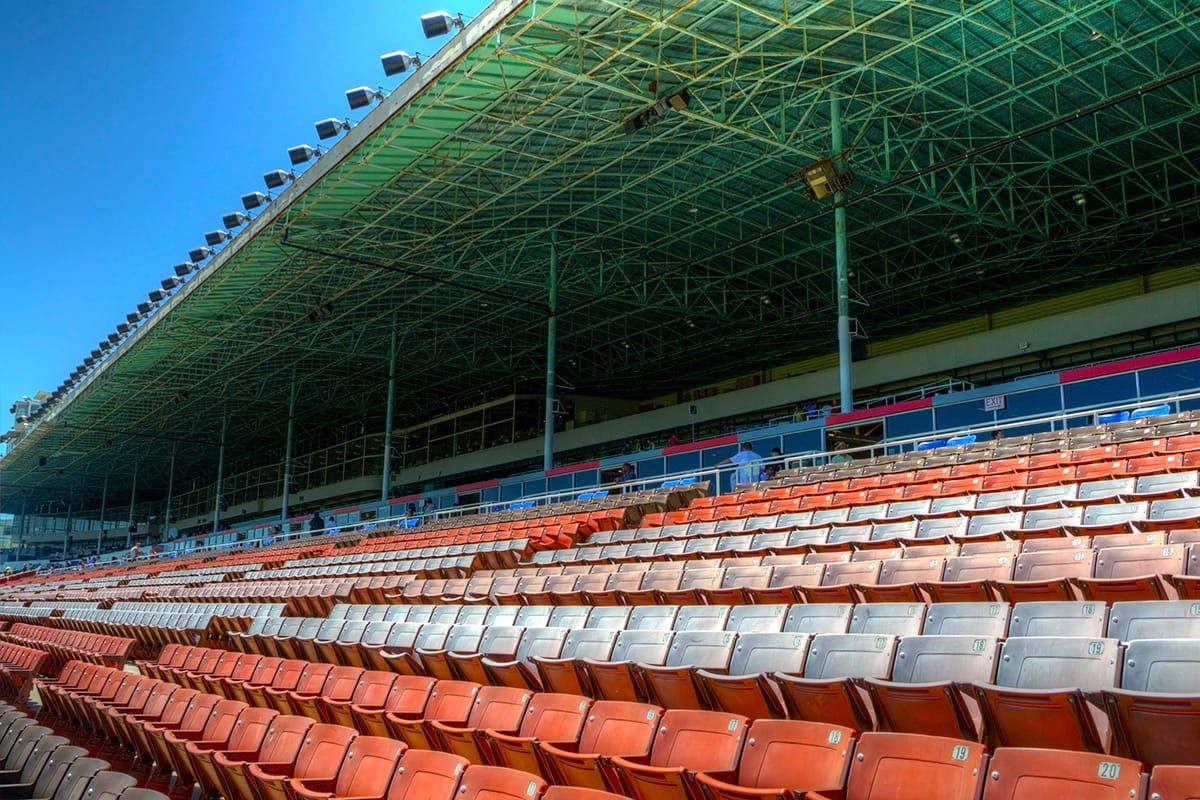
But what if there are structures worth saving and reusing, such as the tower, portions of the grandstands or other buildings? We only have to look at Oakland's Township Commons for an excellent example of adaptive reuse.
At the former port area, developers have preserved one warehouse building, which now houses businesses, and left some of the superstructure of another building in place for visual interest and as a reminder of the past use of the land.
The Presidio is another outstanding example of transforming land into a park, while reusing many of the structures. The East Bay Regional Park District has considered adaptive reuse in its own parks, including Thurgood Marshall Regional Park.
We may want to keep some structures for maintenance facilities, shelters, interpretive centers or other uses. Additionally, there is a lot of embodied carbon in these structures. Demolition and reconstruction mean a lot of additional carbon emissions and lost opportunities that we will never have again.
A call for more public oversight
We are told that there is nothing to be done at this point about the decision to have the demolition be part of the purchase. I call BS.
This should be a public process, and the public should be able to weigh in on how the land is to be used, including whether to preserve any structures. Instead, the public is being completely left out of the decision about tearing down all structures and leaving all asphalt and concrete.
The issue is that the major stakeholders are almost all public entities. And public entities require public processes. However, Trust for Public Land is a private institution.
There's nothing inherently wrong with public institutions working with the private sector, but they should be working for us, the public, not making decisions on their own about how the land purchase will take place.
In fact, we must compel them to work for us, because they have no stake in the land. The land will be transferred out of their hands immediately upon the sale, so they have little incentive to consider what the best use of the land and structures will be. They will be only one of many private voices involved in the public discussion about the design of the park after the park is transferred. And they are negotiating with the owners, who will also walk away once the sale occurs.
As one Albany City Council member said, Trust for Public Land has not been a good partner. They have hardly communicated with the Albany City Council and almost left them out of several tours of the site where they invited other stakeholders.
As a private institution, they do not have to be accountable to the public. However, our public institutions can hold them accountable, and they should, as this will become public land.
I call on our state and local legislators and the East Bay Regional Park District to compel Trust for Public Land to take the demolition out of the land deal and instead either negotiate a lower price or negotiate a demolition fund to be used for whatever demolition is appropriate after the public process results in a plan for what the park will be.
Albany tax revenue is also at stake
Albany is a very small town with a small business tax base, and every penny of revenue counts for us. We already have a number of acres of land that have been taken off the tax rolls because they are in public hands.
The University of California owns UC Village, and the federal government owns the USDA facility. That means that this large chunk of land at the southwest corner of Buchanan Street and San Pablo Avenue is already tax-exempt.
With the sale of the Golden Gate Fields site to the public sector, we stand to lose up to $2 million in revenue that comes into the city and the school district.
Have the stakeholders working toward this sale taken Albany's revenue into account? Not that I am aware of. One way to do this would be to deed a portion of the land to the city of Albany, but I have heard no mention of this.
We should slow down and get these details right. Why are we making irreversible decisions about the land before we have even a vision of what it will look like and how it will be used?
The timeline for the purchase has already proven too aggressive, as Trust for Public Land says it needs more time to negotiate some other details, such as a fund for any toxic remediation that might need to be done. The fact that we are taking the land "as is," with little recourse for what happens should significant environmental issues surface, should also give us pause about the process.
 Guest Essay
Finally, I'll put in a plug for my favorite idea about transformation of the land. The top of the hill, Fleming Point, was lopped off for fill. We should restore it, just as the National Park Service restored the top of Angel Island, which was lopped off for military purposes.
I urge readers to continue to follow the process of this acquisition and weigh in about the possible loss of structures that you might want to preserve, and the effect of the loss of revenue on Albany.
The East Bay Regional Park District Board has already voted to allow East Bay Parks staff to execute the transfer of the land, and so there may be few or no additional public hearings about this sale, at least before the East Bay Parks board.
Write and call your Albany City Council members, park district board members and our regional state legislators and let any concerns you have be known. And write to Trust for Public Land, although so far I've found that they are not responsive to the public and perhaps not even to some of our elected leaders.
Finally, check out this website from a fellow East Bay resident who is thinking along similar lines. And consider signing this petition.
Have questions for Albany Scanner, or want to share story tips? Here's how to reach us.