
When Albany almost became part of Berkeley
A bitter fight over whether Albany should have its own high school divided the city in the 1920s.
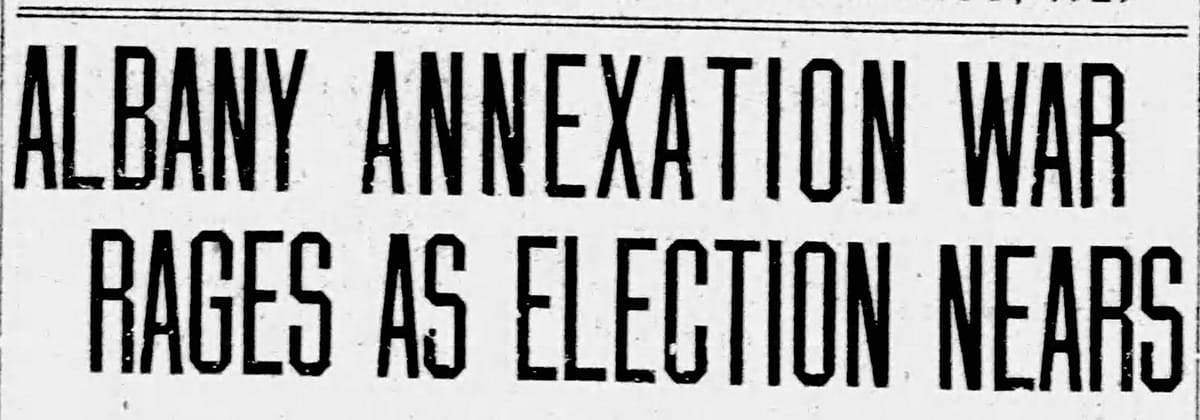
The mood was tense during the mass meeting. Five hundred people jammed the Cornell School auditorium where — two days before voters would decide Albany's fate — the benefits of Berkeley annexing Albany were being discussed. It was the third time Albany would vote on the issue.
Speakers lined up by the pro-annexation meeting organizers included a local assemblyman, a Berkeley Chamber of Commerce officer and a UC Berkeley professor.
At first, the benefits of annexation were calmly outlined, according to news reports. But the meeting began to disintegrate, and heckling ensued as the discussion reportedly veered to "attacks on Albany officials" (who were against annexation).
The officials were accused of "alleged inefficiency, unequal tax assessments, lack of school facilities and inability to provide sufficient funds for educational needs," stated a news article. When annexation opponents attempted to break into the discussion with other viewpoints, their comments were rejected and they were told to have a meeting of their own.
Earlier in the day, annexation supporters had paraded with a band and cowbells through downtown Albany where many of their opponents lived, incensing annexation foes who tore down the group's pro-annexation banner.
The tension reflected the built-up controversy that prevailed over a rancorous four-year period that almost led to the elimination of Albany. At the heart of the issue was education.
A city without a high school
As Albany grew after its 1908 incorporation, so did its schools. But a problem occurred when students were ready to attend high school: There wasn't one.
Albany students had to go to other cities, such as Berkeley or Richmond, to complete their secondary education (paid for by Albany via a special "pro-rata" arrangement).
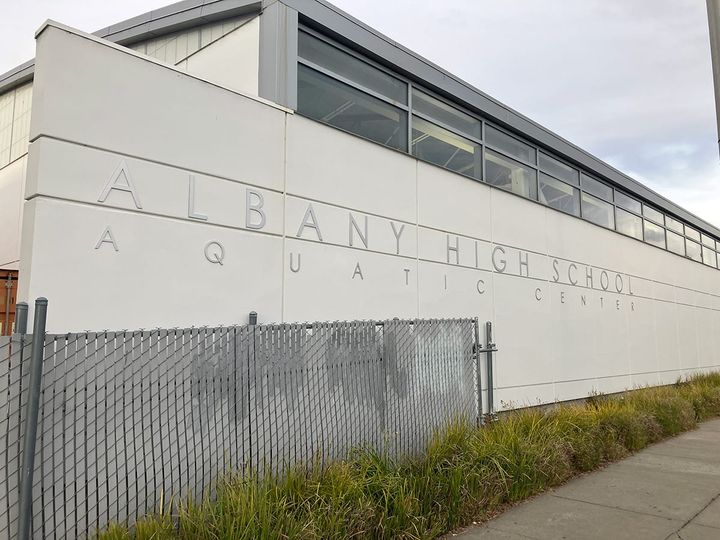
In 1928, Albany established Herbert Hoover Junior High School (near today's Albany High School) and transferred seventh and eighth grades there to relieve overcrowding at the elementary schools. Ninth grade was soon added, and discussions began about Albany establishing its own high school.
But a significant number of Albany residents — mainly those living east of the Santa Fe train tracks (today's BART corridor) — wanted their children to attend Berkeley High School. They believed Albany could not adequately support a high school.
The multi-year battle involved numerous court cases, as well as accusations of city insolvency, recall threats, libel suits and even flattened tires (reportedly discovered after a particularly heated meeting).
After failing to have Albany's school district merge with Berkeley's, the group — which became known as the Albany Taxpayers' League — advocated that Berkeley should annex the entire city of Albany so students would automatically attend Berkeley High. Berkeley officials stated their support of this idea.
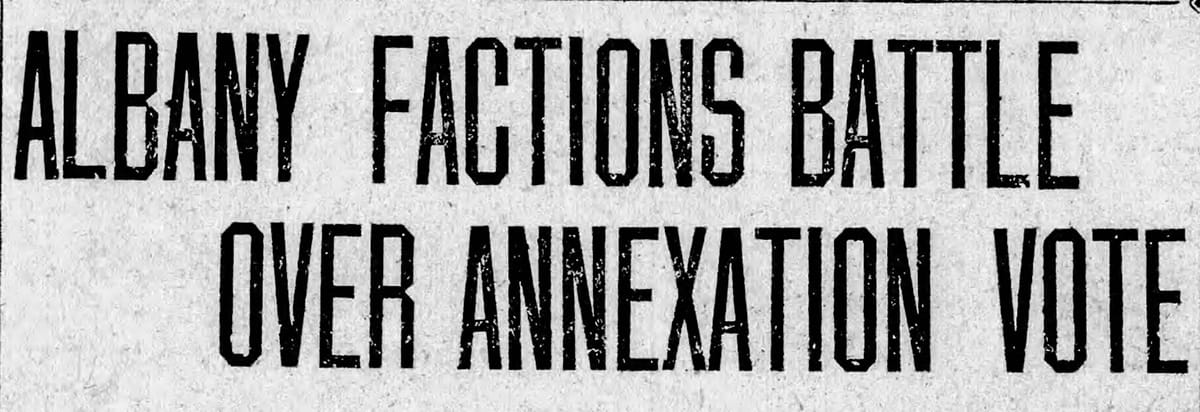
Many other Albany residents — mostly those living west of the tracks, as well as the Albany City Council, school board and business community — wanted Albany to remain independent and build its own high school.
The issue split the town throughout the late 1920s. Numerous attempts to establish a separate school district to operate an Albany high school were voted down by annexation supporters, as were multiple high school bond measures.
After Albany approved a special $3 property tax to support a high school, annexationists went to court, where the tax was ultimately declared illegal.
The multi-year battle involved numerous court cases, as well as accusations of city insolvency, recall threats, libel suits and even flattened tires (reportedly discovered after a particularly heated meeting).
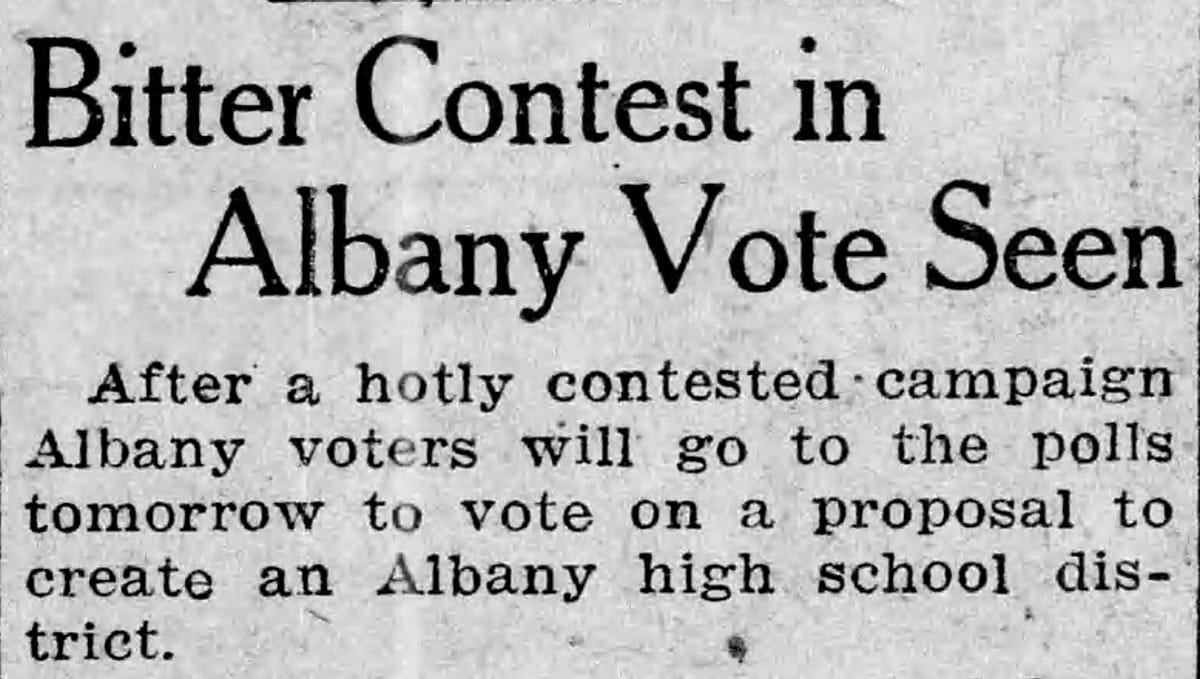
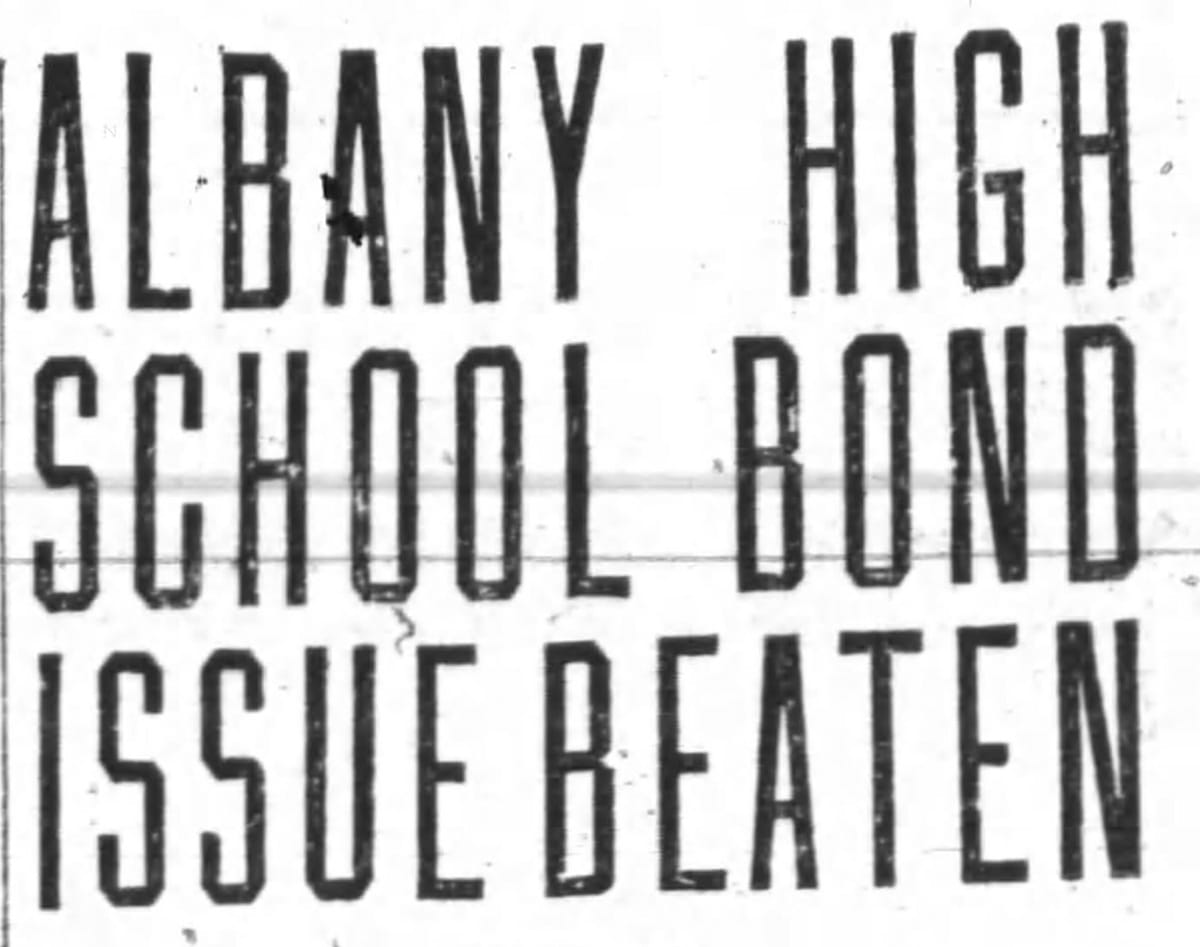
Albany's attempts to support a high school were repeatedly voted down in the 1920s.
Albany rejects Berkeley annexation for third time
The controversy came to a head when, shortly after the stock market crash of 1929, Albany voted for the third time in three years on annexation to Berkeley. Like the times before, voters rejected joining Berkeley by a slim margin — this time by 225 votes (1,637 against, 1,412 for).
"Albany is still Albany and will be for some time to come," said Lovett Fraser, Albany's city attorney, after the election. "This is the third time this annexation question has been voted upon in the city. It's time the annexationists were good sports and admit their defeat."
Resistance to Berkeley's annexation efforts dated back even further. In the early 1900s, before the city of Ocean View incorporated (later renamed Albany), Berkeley made more than one attempt to annex land north of its borders, including the pre-Albany area.
Residents voted down this effort, concerned in part about possible tax increases. Many also shared sentiments with nearby West Berkeley, which had numerous disagreements with East Berkeley and at one point even launched an unsuccessful secession movement.
It's possible some 1920s Albany residents recalled these sentiments, as well as the significant challenges — including Berkeley garbage dumping and border disputes — Albany had overcome to incorporate just 20 years earlier.
Albany finds money for a high school
By the early to mid-1930s — despite the financial hardships of the Great Depression — Albany was finally making progress in building its high school.
The city adopted a "pay-as-you-go" tax structure, to avoid overburdening taxpayers with a heavy one-time tax, as it built various units of the high school along Key Route Boulevard. It also secured government funding, including federal New Deal funds in the form of Public Works Administration grants.
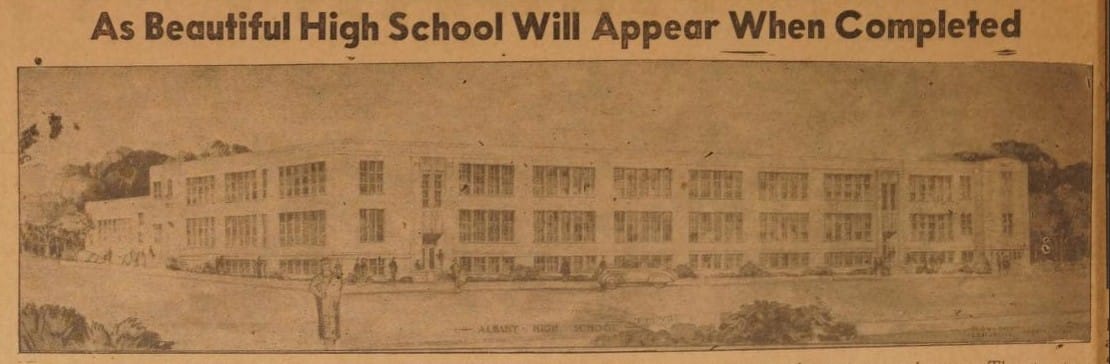
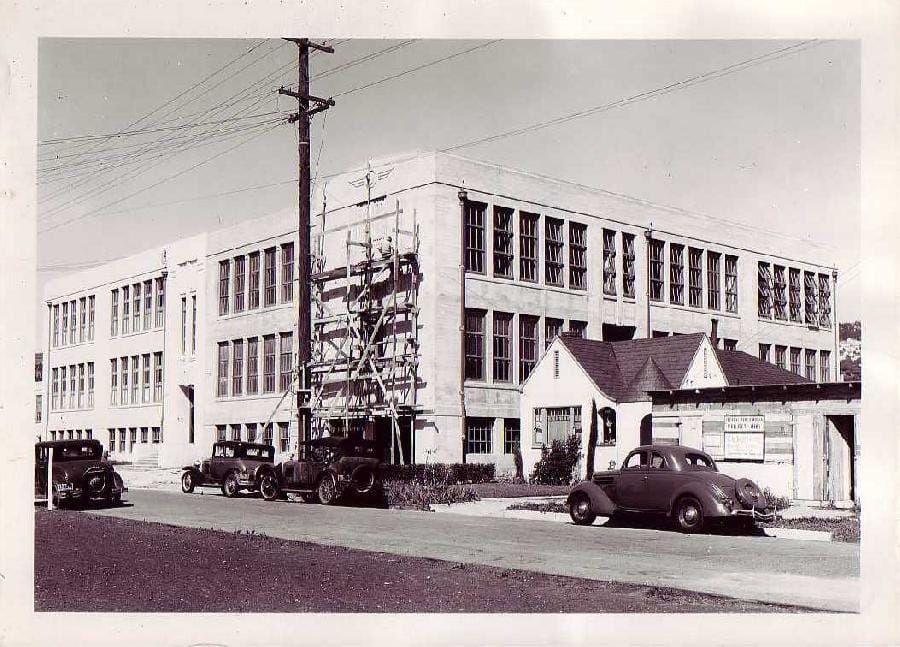
At least four different units of the high school were built with the aid of grants throughout the 1930s. The main high school building was completed in 1936. In addition to classrooms, features of the new school included a print shop, biology laboratory, English room with stage, library, cafeteria and more.
During the 1930s, high school enrollment quickly began to expand. Average daily attendance jumped from 147 students in 1934 to 674 at the end of the decade.
Announcements of high school graduates marked the growth. A mid-1930s school yearbook featured a photo of one of the first Albany High School graduating classes, numbering just seven students in 1935. By 1939, local newspapers announced 86 graduating seniors.
By the mid-1940s, Albany High School was well established, with a total enrollment of nearly 900 students and a staff of 40 teachers.
Despite years of opposition and obstacles — followed by the challenges of the Great Depression — Albany found a way to build its own high school and continue on as an independent city.
Karen Sorensen is a local historian who has authored two books and numerous articles on Albany history. As a member of the Albany News Project, she donates history articles to Albany Scanner in support of the publication.
Have questions for Albany Scanner, or want to share story tips? Here's how to reach us.