Why hasn’t the Albany Bowl housing project broken ground?
Albany says its work is done. What happens next is up to the developer.
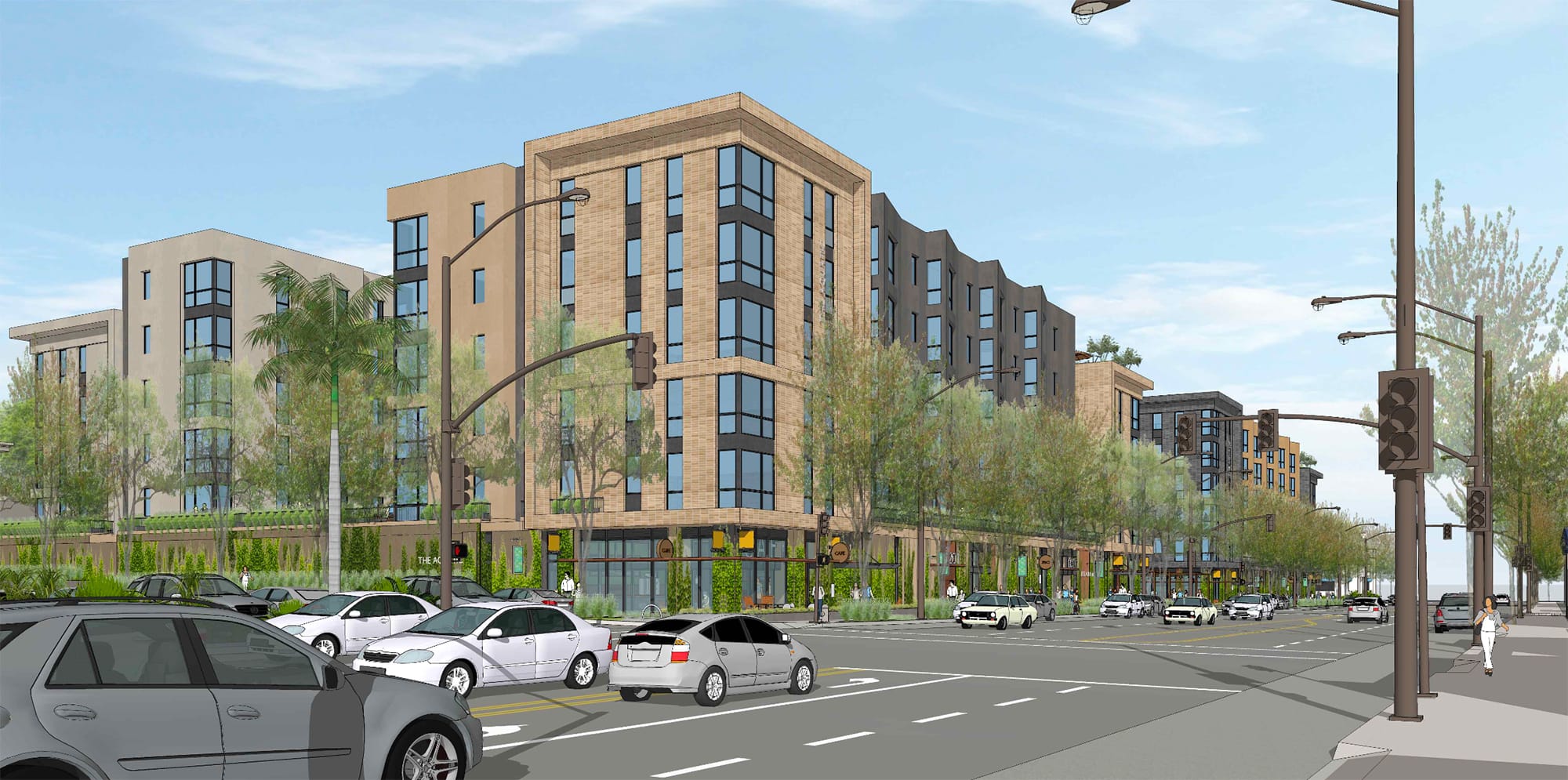
Nearly five years after Albany approved a major housing complex at the former Albany Bowl site, there's still no word on when construction will start.
City officials say they have completed their role in the approval process and are waiting for the developer to begin construction.
The proposed project, approved by the Albany City Council in October 2021, would provide 198 apartments, nine townhouses, 4,000 square feet of retail and restaurant space, and parking for 180 cars and 268 bicycles on the former Albany Bowl site.
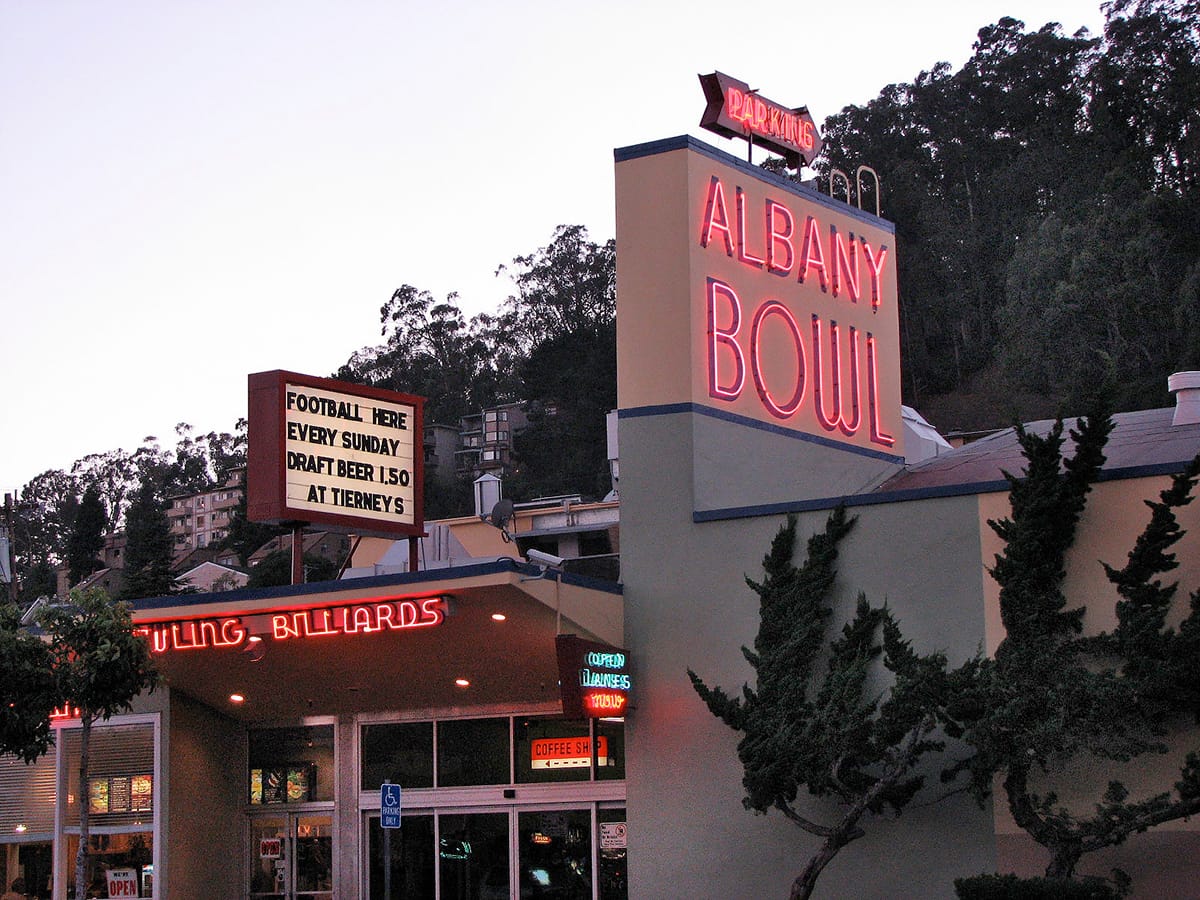
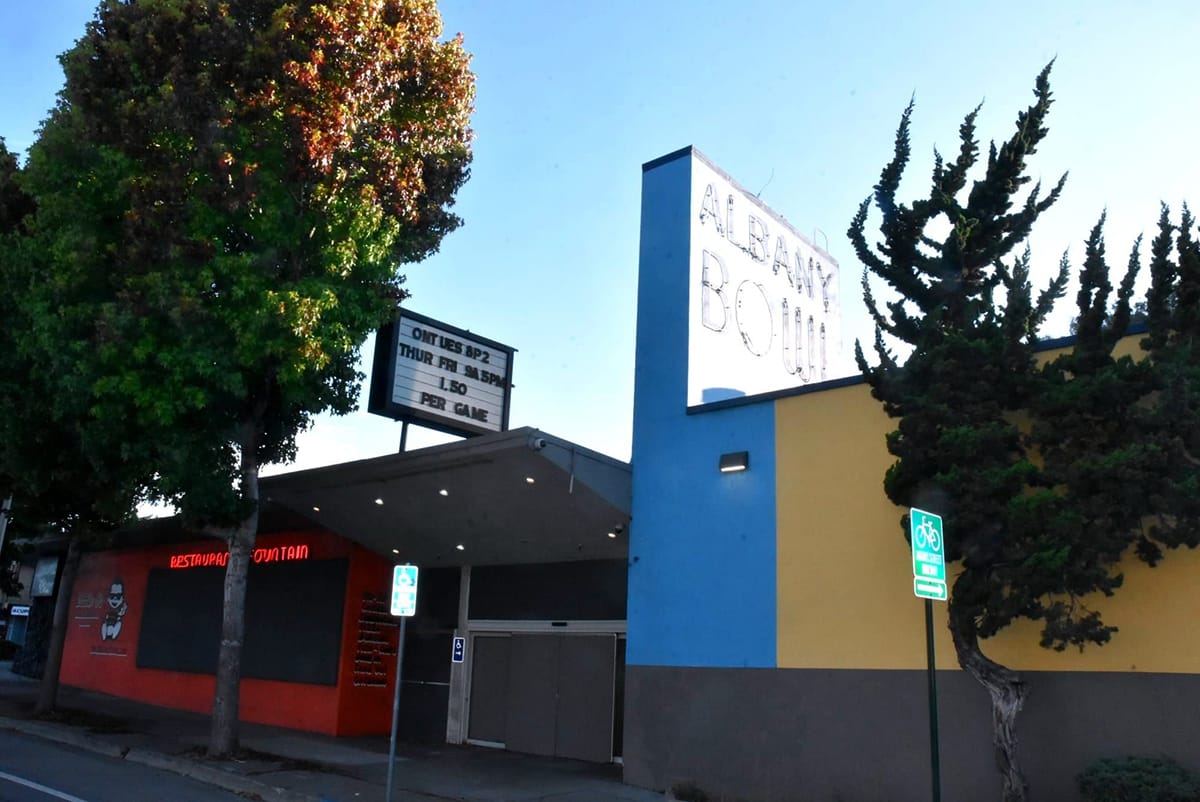
The beloved bowling alley closed in 2020, after a 71-year run, because of pandemic-related shutdowns, months of lost business and a lack of government relief, owner John Tierney told the East Bay Times in December 2020.

"The billiard room, restaurant and sports bar first opened in 1949, and has been a fixture in the community ever since," SFGATE reported in 2020. "Upon hearing the news of its impending closure, fans of the bowling alley have reacted with an outpouring of support and grief. Many have shared their favorite memories, from attending bowling birthday parties as kids to drinking beers there on Friday nights."
The Albany Bowl project was originally pitched as part of the Aquatic Living brand of housing developments designed by SDTarch (formerly Trachtenberg Architects). The brand has several sites in Berkeley, including one on San Pablo Avenue at Ashby.
At least 21 of the proposed 207 units would be reserved for applicants earning 30% to 50% of the area median income, translating to $59,400 for a one-person household or $84,850 for a four-person household, according to state income guidelines.
Despite the delay, the submitted permits still count toward Albany’s state-mandated housing requirements, California Department of Housing and Community Development spokeswoman Alicia Murillo confirmed.
State law requires all California cities and counties to identify adequate sites for housing to meet existing and projected needs for varying income-levels.
The state also determines how many new homes regions must build.
Locally, the Association of Bay Area Governments decides how to distribute this Regional Housing Needs Allocation, or RHNA.
The total 2023-31 RHNA across all counties and municipalities in the Bay Area is 441,176 units, a 234% increase from 2015-23.
In the current cycle, Albany received one-quarter of one percent (0.25%) of the regional allocation, or 1,114 units.
That's more than three times the 335 units required during the 2015-23 period.
Albany's current RHNA includes 308 units for very low-income households, 178 units for low-income households, 175 units for moderate-income households, and 453 units for above moderate-income households, according to the city's Housing Element, adopted in 2023.
Albany Bowl site is shovel-ready, city says
Albany spokesman Brennen Brown said developer R&S Realty has secured all needed approvals from the city and paid its building permit fees, adding that "there is no other action needed" from the city.
According to Albany’s current Housing Element, progress on the development at 540 San Pablo Ave. slowed after approval because of site-specific engineering challenges, including the need to realign storm drain infrastructure, as well as "broader economic pressures" such as rising construction costs, labor shortages and higher interest rates.
Brown said that, while the storm drain design work is done, the actual work won't happen until construction starts.
He said, speaking generally, "broader market conditions have made it more challenging for development to occur."
The city does not anticipate holding additional public meetings "because the project has already completed the required public review," Brown said.
Still, from Albany's perspective, the project could break ground anytime, he added.
How the broader economic challenges might shape the schedule is less clear.
Brown directed questions about financing, construction costs and project timelines to R&S Realty, which had not responded to a Scanner inquiry by press time.
The delay comes as Albany and communities throughout California face continued pressure to increase production under state housing laws.
The Albany Bowl project is one of many housing developments in the Bay Area that have yet to break ground despite getting the necessary local entitlements.
Many have struggled to move forward because of financing challenges, higher interest rates and increased construction costs affecting residential development statewide.
Nearby in downtown Berkeley, more than a dozen housing projects are reportedly stalled despite having secured approvals.
Have questions for Albany Scanner, or want to share story tips? Here's how to reach us.
Editor's Note: Several minor technical details were clarified after publication.